
The 2026 Infrastructure Squeeze: Why Hetzner’s Price Hike Doesn’t Break the Cloud Exit Math
The 20-year precedent of cloud infrastructure costs trending strictly downward broke in Q1 2026.
If you are a CTO, VP of Engineering, or CFO managing a significant infrastructure footprint, the recent notifications hitting your inbox require a strategic reassessment. On February 23, 2026, independent cloud provider Hetzner announced a price adjustment effective April 1, 2026. This follows AWS silently raising EC2 Capacity Block prices for ML workloads by 15% in January, and OVH Cloud forecasting a 5-10% industry-wide cost increase by mid-year.
Many engineering teams who migrated to independent cloud providers for “Infrastructure Arbitrage”—trading public cloud premiums for managed bare metal—are asking a critical question: Does this price increase invalidate the math behind our cloud exit?
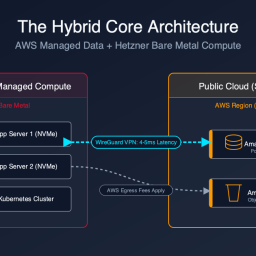
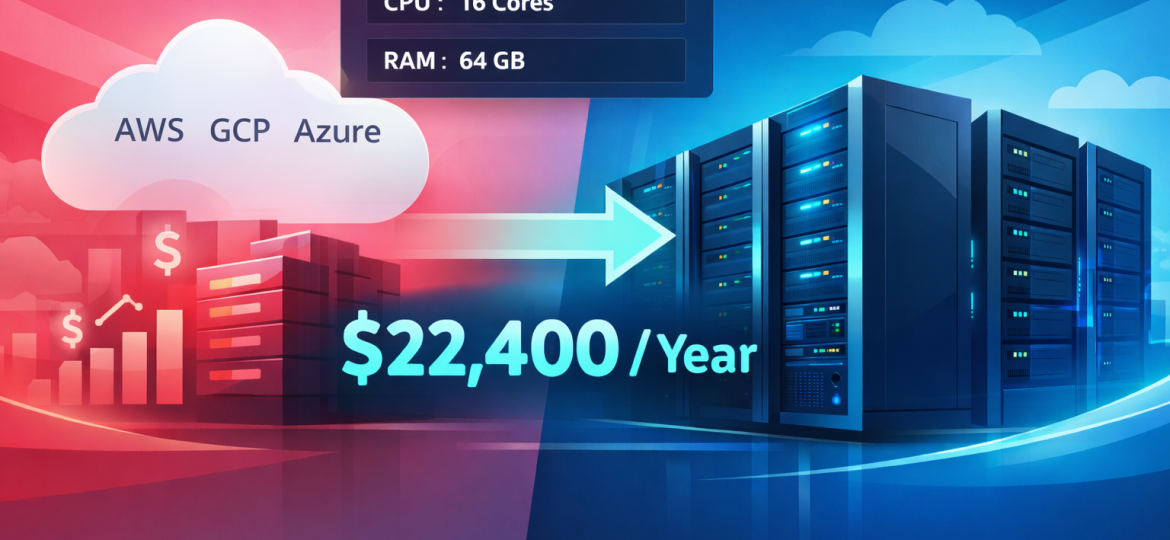
The short answer is no. Even with adjusted 2026 pricing, running workloads on managed Hetzner infrastructure remains 40-60% cheaper than equivalent compute on AWS, Azure, or Google Cloud. DevOps Squad’s Hybrid Core product runs on top of Hetzner bare metal—fixed monthly pricing, no egress surprises.
Here is the data, the macroeconomic context driving these changes, and why the core thesis of infrastructure arbitrage remains intact.
1. The Macro Reality: A Global Hardware Squeeze
The Hetzner price adjustment is not an isolated event; it is a downstream effect of a structural shift in the hardware supply chain. All cloud providers—from hyperscalers to independent operators—purchase from the same OEMs (TSMC, NVIDIA, memory manufacturers) and face identical pressures.
The DRAM Squeeze
Memory costs have fundamentally shifted. Manufacturers have aggressively pivoted production toward High Bandwidth Memory (HBM) to meet the insatiable demand for AI accelerators. As a result, the supply of standard server memory has constrained. DDR5 prices surged 307% since late 2025, and DDR4 is up 158%.
The GPU Shortage & AWS’s Precedent
On January 4, 2026, AWS raised the price of its `p5e.48xlarge` instance (eight NVIDIA H200 GPUs) from $34.61 to $39.80 per hour. This 15% hike broke a foundational assumption of cloud economics: that economies of scale would always be passed down to the customer. The demand for H200 units outstrips supply by roughly 3:1, and TSMC is prioritizing newer architectures, severely limiting output capacity.
OVH’s 5-10% Baseline Forecast
OVH Cloud publicly forecast 5-10% price increases across all major providers taking effect between April and September 2026. This is driven by hardware cost inflation of 15-25% for servers, primarily due to RAM and NVMe drive price increases.
When AWS raises prices dynamically and OVH forecasts systemic inflation, Hetzner’s April 1st adjustment is simply the realization of this supply chain reality. The difference lies in the baseline margin.
2. Re-evaluating the TCO: The Math Still Works
Public cloud providers operate on massive margins, effectively charging a “logo tax.” Independent providers like Hetzner operate on thin margins, charging closer to cost. When hardware costs rise, low-margin providers must adjust prices sooner, but the absolute dollar difference remains heavily skewed in favor of independent infrastructure.
Let’s look at the three pillars of the Infrastructure Arbitrage thesis under the new 2026 pricing conditions:
Compute & Memory Economics
Even with a price increase on Hetzner’s AX, EX, and SX lines, the cost per core and cost per gigabyte of RAM remains an order of magnitude lower than AWS EC2 or GCP Compute Engine.
For example, provisioning 256GB of ECC RAM and 24 cores of AMD EPYC compute on AWS will still cost thousands of dollars per month. On Hetzner, even post-adjustment, equivalent bare metal configurations sit in the low hundreds. A 10% increase on a $150 server is $15. A 10% increase on a $1,500 EC2 footprint is $150.
The Egress Fee Factor
The most punitive line item on any AWS or Azure invoice is data transfer (egress). Public clouds charge exorbitant per-GB fees for data leaving their network. Hetzner includes 20TB or unmetered bandwidth on most dedicated servers.
The 2026 hardware supply chain squeeze does not affect fiber optic data transfer economics. The egress fee trap remains the primary reason bandwidth-heavy applications (video, ad-tech, large-scale APIs) die on public cloud. Moving to Hetzner continues to eliminate this variable cost entirely.
Managed Infrastructure Overhead
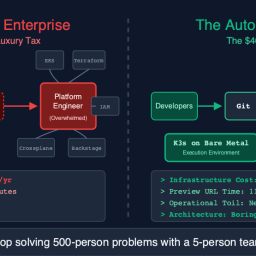
The common counter-argument to Hetzner is: “But I have to hire a DevOps engineer to manage the bare metal.”
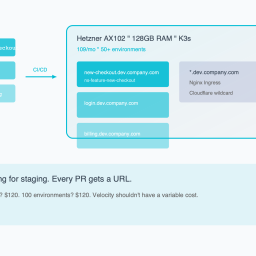
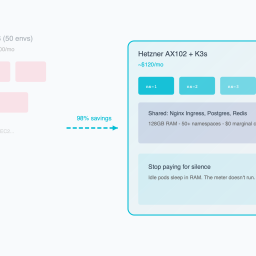
This is where the managed infrastructure model comes in. By utilizing a Platform-as-a-Service overlay or a managed DevOps partner to handle Kubernetes (K3s), backups, and load balancing on top of Hetzner, you retain the operational velocity of AWS without the lock-in. The combined cost of Hetzner hardware + Managed Services remains 40-60% cheaper than the raw AWS infrastructure bill, before even factoring in AWS Enterprise Support.
3. Strategic Takeaways for Engineering Leaders
If you are currently evaluating your Q2/Q3 infrastructure budget, the strategic response requires separating emotional reactions to price hikes from hard financial modeling.
1. Expect Industry-Wide Adjustments: Do not assume AWS On-Demand or GCP pricing will remain static through 2026. Budget for a 10-15% variance across all memory-intensive cloud services.
2. Prioritize Predictability: The greatest risk to a startup’s runway or an agency’s margins is variable pricing. Bare metal infrastructure provides fixed-cost predictability. You know exactly what your invoice will be at the end of the month.
3. Run the Delta: Do not rely on assumptions. Map your current AWS/Azure footprint (Compute, RAM, Storage, Egress) 1:1 against Hetzner’s April 2026 pricing plus a management layer.
We have just updated our Cloud Exit Calculator with the newly announced Hetzner pricing and the latest AWS instance costs. It allows you to input your current public cloud spend and see the exact TCO of moving to a managed independent cloud architecture like our Hybrid Core product.
The era of cheap hardware may be pausing, but the financial logic of exiting the public cloud monopoly has never been stronger.
FAQ
Does the Hetzner price increase invalidate the cloud exit math?
No. Even post-adjustment, managed Hetzner infrastructure remains 40–60% cheaper than equivalent AWS/Azure/GCP compute. The egress fee elimination alone preserves most of the savings.
Should I expect more cloud price increases in 2026?
Yes. OVH forecasts 5–10% industry-wide increases by mid-2026. Budget for 10–15% variance on memory-intensive services. Fixed-cost bare metal eliminates this variable risk.
Where can I compare my AWS bill to Hetzner?
Use our Cloud Exit Calculator with Q2 2026 pricing. Or get an Infrastructure Audit ($495) for a tailored migration blueprint and savings projection.
Want to see the exact financial delta for your specific architecture? Run your numbers through our updated Q2 2026 Cloud Exit Calculator here.
Reclaim your proprietary data. Deploy Private AI.
Stop sending your proprietary IP to external APIs and managed SaaS. We deploy high-throughput inference and stateful agents directly onto your own Bare-Metal or VPC infrastructure. Execute AI workloads with zero API taxes, zero hyperscaler lock-in, and absolute control over your data.