

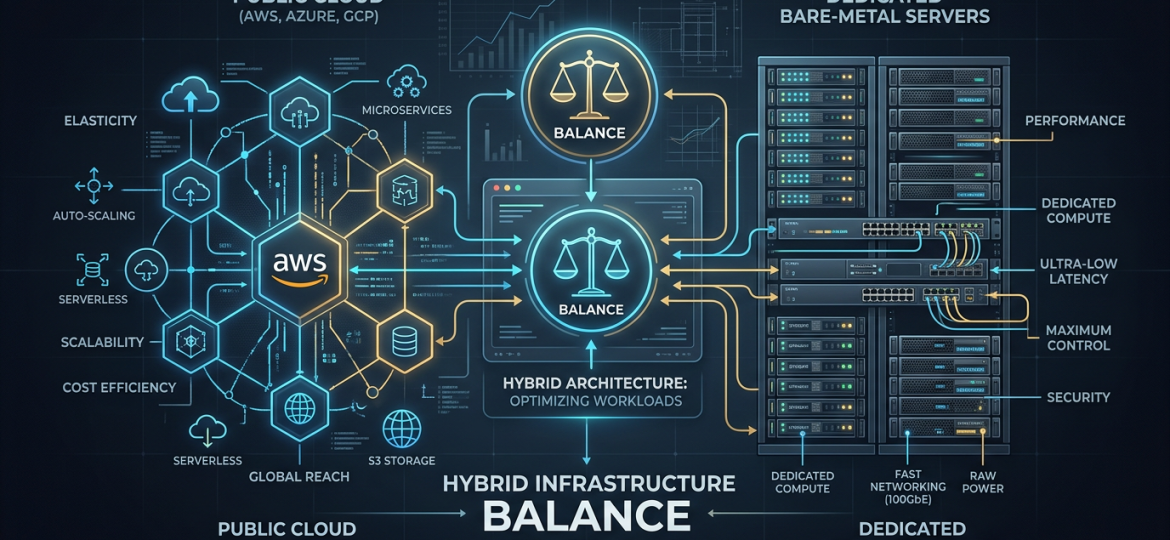
Quick Answer: The Hybrid Core is an infrastructure strategy that keeps stateful data (like databases and object storage) in public clouds like AWS, while moving expensive, steady-state compute workloads to dedicated bare-metal servers like Hetzner. This reduces cloud costs by up to 60% and drastically reduces outbound egress fees, without sacrificing the benefits of managed database services.
As a Mid-Market CIO, you are likely facing a strategic crossroads: your cloud bill is growing faster than your revenue, yet your engineering team relies on the managed services that public clouds provide. The industry narrative tells you to either go “all-in” on AWS or embark on a multi-year, highly disruptive “cloud repatriation” project to bring everything back on-premise.
Neither option is practical. The smart money in 2026 is moving toward a pragmatic middle ground: Hybrid Core.
Why is there a paradox between elasticity and steady-state workloads?
Public cloud providers like AWS and Azure built their empires on the promise of infinite elasticity. You pay a premium for the ability to spin up 1,000 servers in three minutes and shut them down an hour later.
But what if your workloads aren’t elastic?
If you are running a stable SaaS platform, a corporate ERP, or an internal data warehouse, your baseline compute needs are relatively static. You are paying a massive “elasticity tax” for a capability you rarely use. You are renting capacity at a 400% markup when you could be owning the performance.
The Baseline Hybrid Core Architecture
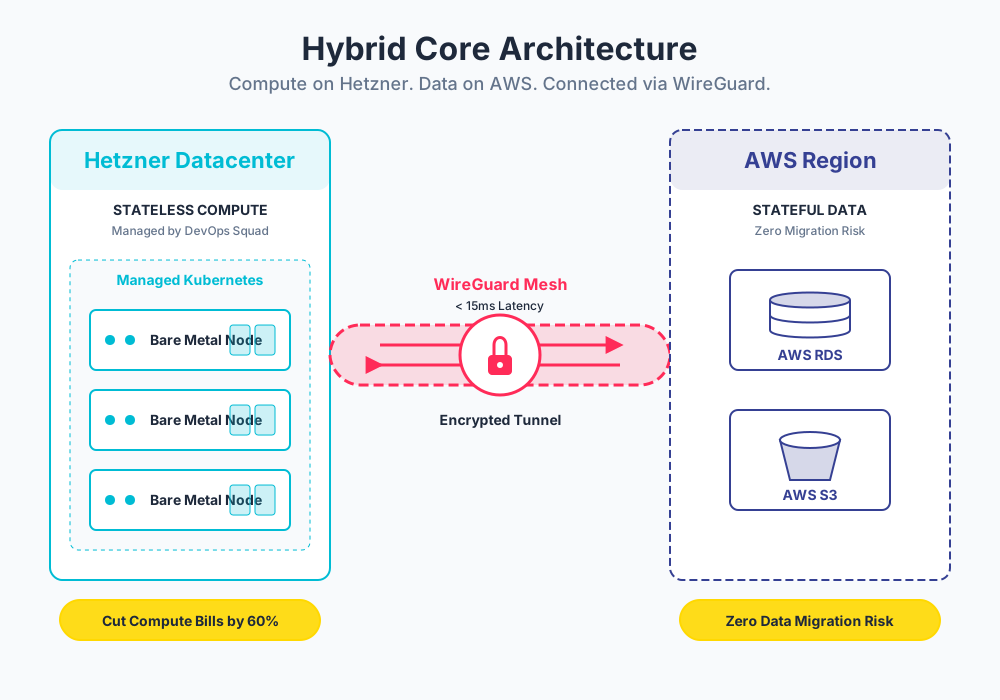
The baseline Hybrid Core philosophy is simple: Keep your stateful, difficult-to-manage data in the public cloud, but move your expensive, steady-state compute to independent bare metal.
Here is how it works in practice:
- Managed Databases (AWS RDS/Aurora): Keep your critical databases in AWS. The automated backups, point-in-time recovery, and multi-AZ failovers are worth the premium.
- Object Storage (AWS S3): Keep your deep storage in S3. Its durability and lifecycle management are unparalleled.
- Compute & Application Layer (Hetzner Bare Metal): Move your Docker containers, Kubernetes clusters, and raw application servers to dedicated Hetzner hardware.
The perceived blocker for this architecture is latency. How do you connect independent compute servers to a public cloud region without crippling your application?
The answer is a dedicated, low-latency VPN tunnel (like WireGuard) over the public internet, or a dedicated private interconnect via a provider. By strategically deploying your bare metal compute in data centers that are geographically adjacent to major public cloud availability zones, the inter-region latency sits consistently in the 1-5 millisecond range.
While 5ms latency between the app server and the database is perfectly acceptable for most applications, you must account for connection jitter and the operational toil of maintaining high-availability VPN gateways. Furthermore, any assets pulled directly from S3 to the compute nodes will still incur AWS outbound egress fees.
The Optimized Hybrid Core Architecture (Egress Mitigation)
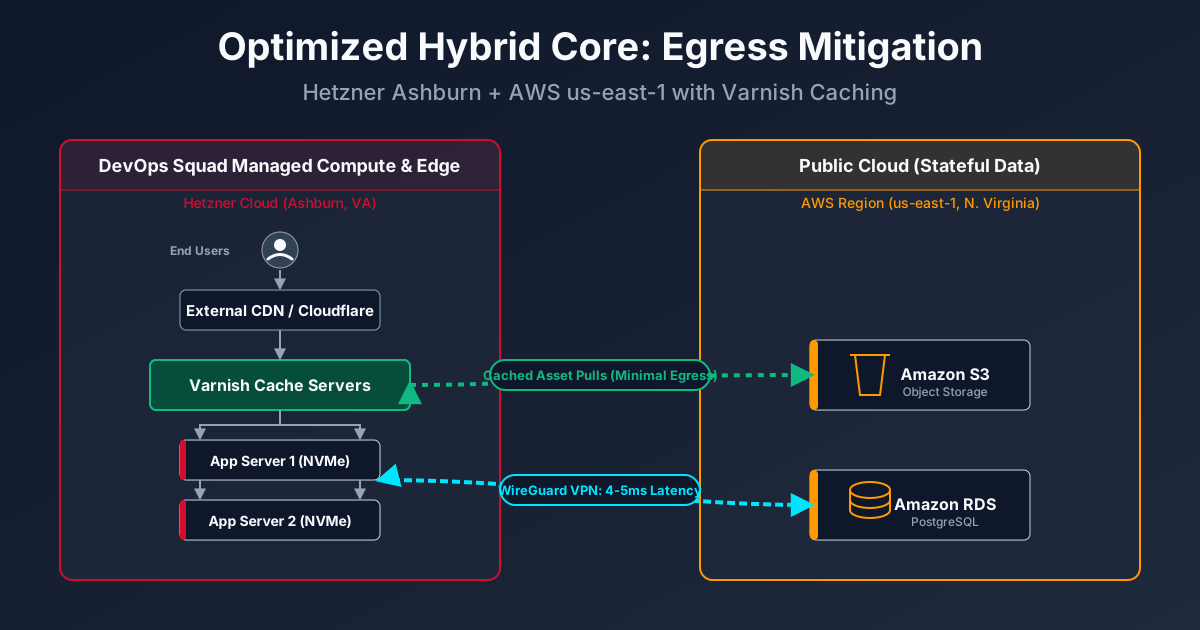
To truly master the Hybrid Core and eliminate the public cloud’s notorious “Egress Tax,” you must introduce an aggressive edge-caching layer. Public clouds charge upwards of $0.09 per GB to send data out to the internet.
When your application servers are hosted on independent bare metal, you benefit from unmetered or highly affordable 10Gbps uplinks. The heavy lifting—serving web pages, processing API requests, and routing traffic to end users—happens on infrastructure where outbound bandwidth is a fraction of the cost. However, pulling large assets from S3 through your external compute nodes will still rack up massive cloud egress fees unless you implement a caching tier.
In an optimized architecture, choosing facilities that are physically close to each other—sometimes even sharing the same data center alley or major internet exchanges—can drop latency down to an incredibly low 1-2 millisecond range. But network speed is only half the equation.
To handle the egress problem, we introduce Varnish Cache Servers (or an equivalent caching proxy) on the bare metal side:
- Direct S3 Pulls: Only the first request for a static asset fetches from AWS S3, incurring a tiny, one-time egress fee.
- Edge Caching: The Varnish layer caches the asset locally on blazing-fast bare metal NVMe storage.
- Zero-Egress Delivery: All subsequent user requests are served directly from the independent edge, completely bypassing the public cloud and neutralizing the egress tax.
Conclusion: The Pragmatic Move
You do not have to choose between the convenience of AWS managed services and the raw financial efficiency of bare metal. The Hybrid Core allows you to arbitrate the market, using the right infrastructure for the right workload.
By strategically selecting adjacent regions and implementing intelligent caching, you can achieve sub-2ms latency while crushing your egress bill. It de-risks your IT spend, extends your financial runway, and lets your engineers continue using the tools they know.
If you want to see the exact math on how much runway the Hybrid Core could save your organization, use our Cloud Exit Calculator or schedule an Infrastructure Audit with our engineering team today.
Reclaim your proprietary data. Deploy Private AI.
Stop sending your proprietary IP to external APIs and managed SaaS. We deploy high-throughput inference and stateful agents directly onto your own Bare-Metal or VPC infrastructure. Execute AI workloads with zero API taxes, zero hyperscaler lock-in, and absolute control over your data.
discovery Zoom. We’ll review your AI workloads, data flows, and current cloud setup, then give you a clear Go / No-Go recommendation. If private inference, agent runtimes, or managed data services make sense for your architecture, we’ll show you the next step. If not, we’ll tell you directly.
Interested? Contact us.
Check out our RSS Feed to keep up with the cloud repatriation news